
Emily in What Paris??
From the creator of Sex and the City, Emily showcases an idealized version of Paris much like Carrie’s New York. Still, there is something irresistible about Emily and all its Insta-ready images of Paris.
Season 2 of Emily in Paris did not redeem itself for being ridicule, as some actual Parisians cried* or for being anything but a “frivolous romp”**. From the creator of Sex and the City, Emily showcases an idealized version of Paris much like Carrie’s New York. The characters have impossibly deep closets with a constant supply of outfits unlikely seen outside Fashion Week. Winter somehow never occurs. No one takes public transportation. And even in Emily’s absence, the French speak a lot of English to each other. Still, there is something irresistible about Emily and all its Insta-ready images of Paris.
Emily’s “friend” and paramour, Chef Gabriel, is reliably charmant in Season 2 as his on-and-off again girlfriend, Cammie, the heiress to a champagne fortune. The love triangle with Emily from Season 1 has been squared with the introduction this season with Alfie, the reluctantly expatriated Brit, whose imminent return home begs the question in the finale: will Emily ditch Paris for London?
Emily’s true friend and now roommate, Ashley, would bring a dose of reality as a struggling artist, if her struggle wasn’t mitigated by the fact that her father is a billionaire. Most welcoming, however, are Emily’s office mates at the marketing agency, Savoir, and its clients. They form an entourage that is at once charismatic, serious, and outrageous. The work-related scenes are reminiscent of the French hit series, Call My Agent! (Dix Pour Cent). If one character stands out from this cadre, it’s Sylvie. She has qualities from several of Carrie’s entourage in Sex and the City: Miranda’s wit, Charlotte’s class, and Samantha’s sass. Sylvie also displays her own savoir-faire, appropriately so for the agency she runs. Incidentally, her one-time beau and rival, Antoine, is played by an actor who appears in both Sex and the City and its sequel, And Just Like That.
Hopefully season 3 will keep Emily firmly in Paris. After all, what would Emily in Paris be without Paris? The city is a character in the show much like New York in Sex and the City. In the season finale of And Just Like That, we see Carrie make a trip to Paris herself. Dressed to the nines, she stands on a bridge above the Seine and scatters the ashes of her late husband, Big, into the river below. (Luckily Emily wasn’t partying aboard a bateau-mouche floating underneath at the time.) And just like that, it was a bittersweet connection between New York and Paris. Is the shows’ creator, Darren Star, teasing us with a potential crossover?
* “’Ridicule’: The French Reaction to ‘Emily in Paris’,” New York Times, October 2, 2020(https://www.nytimes.com/2020/10/02/style/Emily-in-Paris.html)
** Emily in Paris: Season 2 on Rotten Tomatoes (https://www.rottentomatoes.com/tv/emily_in_paris/s02)
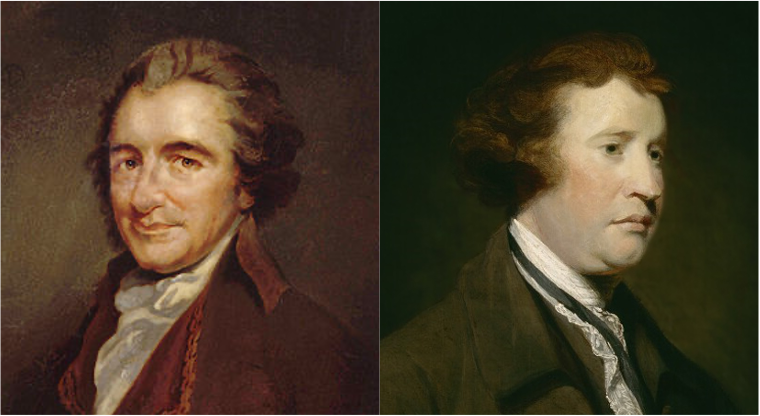
Tom Paine vs. Edmund Burke
David Brooks romanticizes Edmund Burke in an Atlantic essay, but is he really our hero for a bygone conservatism? Tom Paine also reminds us that the only countries of the late eighteenth century that had real liberty were America and France.
David Brooks romanticizes Edmund Burke in an Atlantic essay, but is he really our hero for a bygone conservatism? Sure, Burke was happy to see Americans gain their independence; it allowed Britain to retain an unrepresentative system of government and avoid writing a constitution.
As a conservative, Burke preferred gradual change to institutions, more evolution than revolution. His critique of the French Revolution was therefore not surprising. Burke justly decried its violent turn. Plus, his own country had tried a republican form of government a century before, which failed miserably amidst a civil war.
Brooks rightly notes that Burke championed small government, but faults the Enlightenment for giving us the large, bureaucratic states that conservatives complain about today. Whatever beef one might have against government largesse today, the Enlightenment was hardly the time to look for evidence of it. Large, bureaucratic states emerged in Europe only after the Enlightenment and perhaps to Brooks’ chagrin, under conservative leaders. The administrative state, with multiple specialized ministries and departments, grew over the nineteenth century and spilled over into the twentieth. What coincided with the growth of those big nation-states? Nationalism and imperialism, with all the civil unrest and wars they seeded along with their costs to the taxpayer.
The Enlightenment was not about abject rationalism. It was about reason, which helped bring ideas like equal rights and representation to government. A compatriot of Burke, Tom Paine, had front row seats to these rights in action during the revolutions in both America and France. Paine famously rebukes Burke in The Rights of Man. In it, Paine likens representative government by election to Reason, and hereditary government of monarchy and aristocracy to Ignorance. “What is government more than management of the affairs of a Nation? It is not, and from its nature cannot be, the property of any particular man or family, but of the whole community…” (Paine, 259).
Paine also reminds us that the only countries of the late eighteenth century that had real liberty were America and France. Paine wasn’t just observing this as a philosopher. As an activist, he knew firsthand the value of freedom of expression. The British government felt differently and found him guilty of seditious libel for having written The Rights of Man. Paine fled to France never to return alive to his native Britain.
David Brooks can keep Edmund Burke, but Tom Paine is my hero.
References
Brooks, David. “I Remember Conservatism,” The Atlantic. January/February 2022, 94-98.
Paine, Thomas. “The Rights of Man (1791-2),” The Thomas Paine Reader. New York: Penguin Books, 1987.
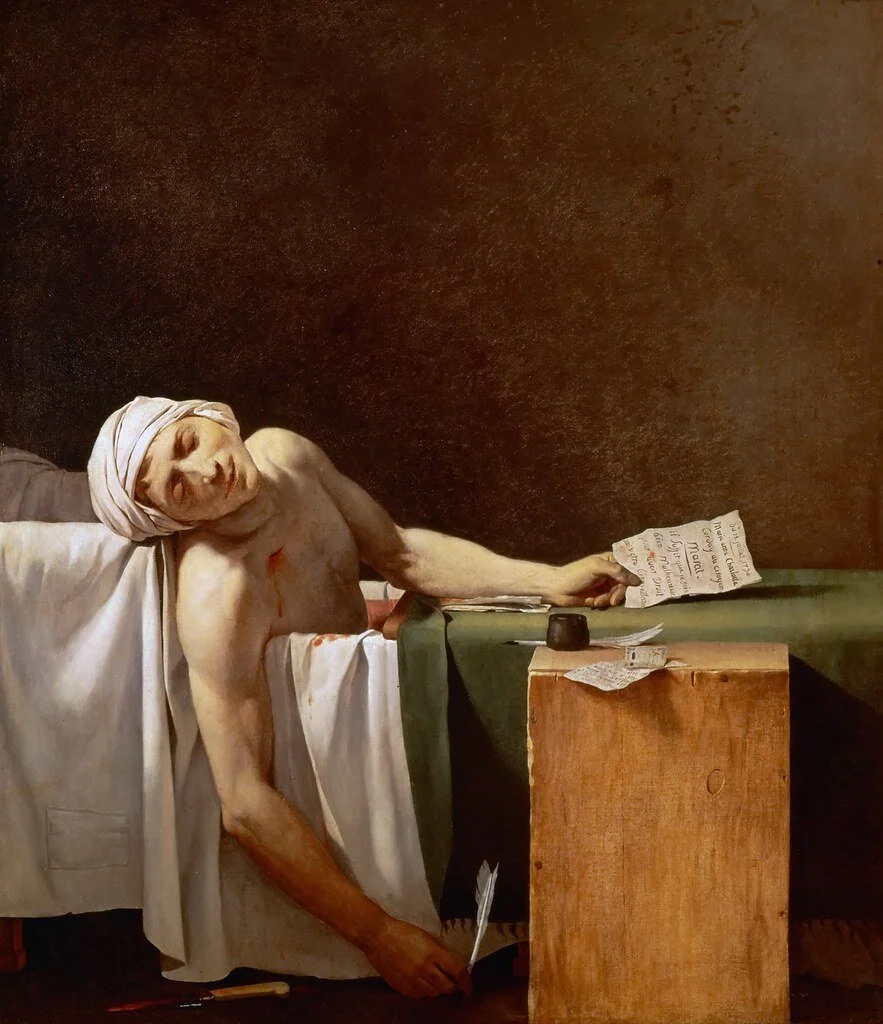
No, we're not French revolutionaries
A US Senator had some choice words to decry the riots on the US Capitol on January 6, 2021, saying: “Americans aren’t French revolutionaries taking to the barricades.” He is right but for reasons even sadder than might appear at first glance.
January 6, 2021 is likely to be written into American history texts as the day when the US Capitol was attacked by supporters of Donald Trump. Ben Sasse, US Senator from Nebraska, had some choice words to decry the day’s infamy: “Americans are better than this: Americans aren’t nihilists. Americans aren’t arsonists. Americans aren’t French revolutionaries taking to the barricades” (https://www.sasse.senate.gov/public/index.cfm/2021/1/sasse-statement-on-attack-against-the-people-s-capitol). Sasse is right about not being French revolutionaries but for reasons even sadder than might appear at first glance.
French revolutionaries lived under absolute monarchy, not democracy. Their leader was no elected official. They had no genuine representation in a national legislature, let alone arbiters of justice in an independent court system. They were in the throes of a despondent and incompetent king who led a gilded life in the palace of Versailles, secluded from the common person. By comparison, the current White House, Mar-a-Lago, and any number of Trump properties around the world might not seem so different. But those rioting the Capitol today were not directing their ire toward their leader.
Before the barricades, French revolutionaries could be found in the very halls of Versailles. Convened to make their case for greater participation in government on behalf of people throughout France, they vowed not to leave until they got a constitution. This act of defiance led to the creation of the first real parliament in France.
Revolutionaries were also found among the women of Paris, many impoverished and fed up with the king’s ignorance of their plight, who marched eighteen miles to Versailles to demand change.
Revolutionaries were also the writers, intellectuals, and salon keepers—activists by today’s standards—who helped propagate ideas about freedom and equality.
Revolutionaries were surely those who took up arms, both to protect themselves from royal guards threatening their lives and to topple the old regime.
No doubt, the French revolution took an ugly, violent turn over the months to come after that fateful 1789. Barricades did indeed go up while heads came off. French revolutionaries became synonymous in the British and American press with radicals.
To compare French revolutionaries from over two hundred years ago with today’s Americans rioting the Capitol, however, is to miss the point. French revolutionaries fought against an insanely rich man who clung to whatever corrupted power he had left. They fought for a republic with democratically elected representatives. Today’s Trump supporters are fighting for just the opposite.
A simple majority is not so simple
A simple majority in the Senate is 51 votes, just one more vote than half the number of senators. But voting in that chamber of the legislature is anything but simple.
What is the simple majority vote that the Republican-controlled Senate is using to confirm Amy Coney Barrett to the Supreme Court?
A simple majority in the Senate is 51 votes, just one more vote than half the number of senators. But voting in that chamber of the legislature is anything but simple.
A supermajority of 60 votes is required to end debate on bills and to pass legislation. As per the Constitution, two-thirds of senators, or 67, are required to pass bills to override a presidential veto. Likewise, motions to amend the Constitution require 67 votes.
But the Senate makes its own rules for anything else the Constitution doesn’t spell out. And that’s where the so-called nuclear option comes in. Back in 2013, Senate majority leader, Democrat Harry Reid, was frustrated by Republican filibustering over President Obama’s nominees to several senior positions in the cabinet and in the federal courts. So, Reid changed the standing rule that normally required 60 votes to end a filibuster with a simple majority vote. Reid got Democrats to go along with the plan, and by a 52-48 vote, they upended four decades of Senate tradition. They changed the rule to lower the threshold to 51 votes to end debate, or break a filibuster. However, that rule change only applied to most presidential nominations—not those for the Supreme Court—and still required 60 votes for the final confirmation vote.
Republicans decried the rule change then, but have been making even bolder use of it since. When they gained control of the Senate in 2017, it was their turn to face Democratic filibustering of President Trump’s nominee to the Supreme Court. Then Senate majority leader, Mitch McConnell, got his fellow Republicans to go along with another rule change. Incidentally, by 52-48, they lowered the threshold for confirmation of the nominee, not just an end to filibuster, to a simple majority.
Republicans have been reaping the benefits of that rule change to confirm not only that first Trump nominee to the Supreme Court, Neil Gorsuch, but also Brett Kavanaugh and now Amy Coney Barrett. Simple, right?
France’s experience with a simple majority brings this questionable practice into focus. The National Convention in France was created in August of 1792 after insurrections led the previous legislature, the National Assembly, to abandon hopes of a constitutional monarchy. Representatives were elected to draft a new constitution. The result, the Convention, was a legislature that ushered in the country’s first republic. It was only a couple years after Americans made theirs.
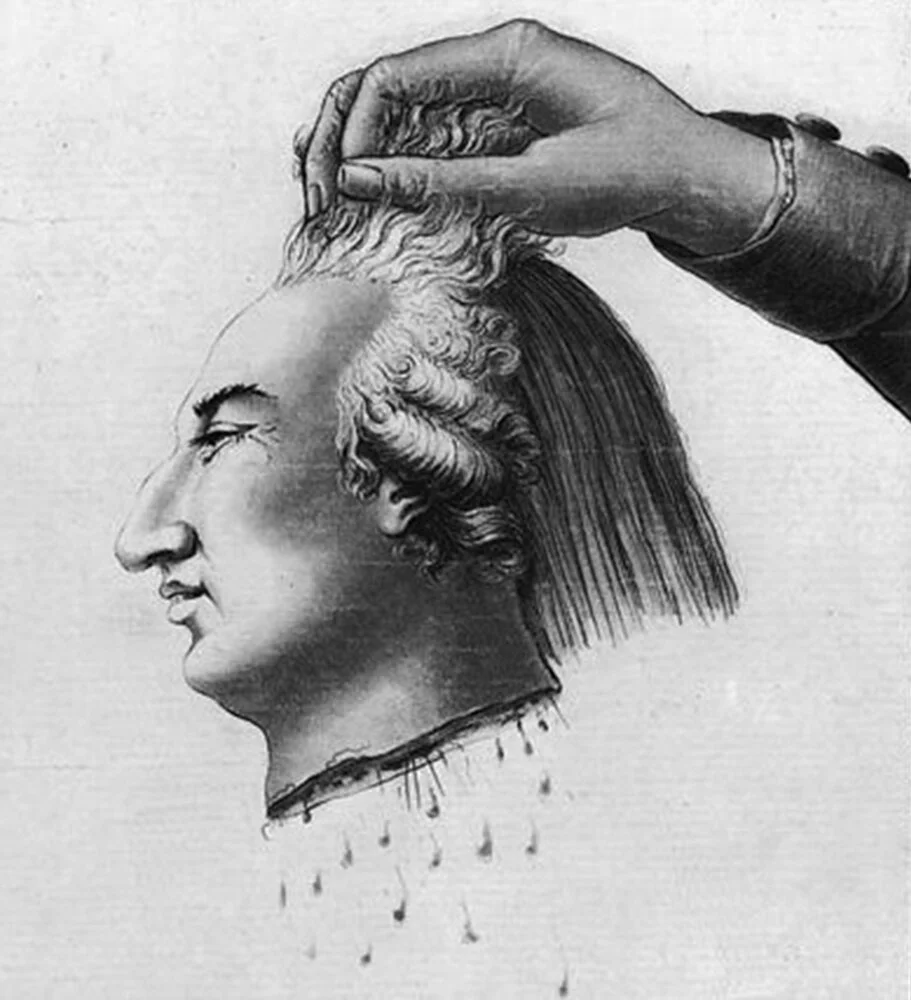
The Convention had already voted to strip King Louis XVI of any remaining powers and punish him for his attempt to flee the country. With a simple majority of 361 to 360 votes, they then condemned him to death. It was unexpected that the fledgling legislature could do this in the midst of the French Revolution. Other options included detaining the king until peace settled within France and with her foreign enemies, then banish him from the country. Cooler minds, however, did not prevail. The majority got what they wanted with just one vote, though in the absence of a separate executive branch. They had taken on that role and even created their own judicial branch, too. Americans might like to think their system of checks and balances immunizes them from a similar fate. However, it was the US Supreme Court that landed George W. Bush his victory in the 2000 election.
A simple majority cost Louis XVI his head in January 1793. The Convention soon began delegating too much power to one of its committees, the Committee on Public Safety, where one delegate in particular, Maximilien Robespierre, assumed dictatorial powers. That fall of 1793 began the Reign of Terror, a radical period of the French Revolution that included massacres and public executions in the tens of thousands, many without facing a trial.
Considering voting thresholds for major political decisions, a simple majority can sometimes turn out to be anything simple.