
Colorblind in France
While American opinions pour in about what France should do better to confront its racism, it is worth remembering the adage about people in glass houses throwing stones. Many Americans admit that racism persists and should end. What they are increasingly asking for to achieve that goal is something closer to the colorblind French model.
While American opinions pour in about what France should do better to confront its racism, it is worth remembering the adage about people in glass houses throwing stones.
When a police officer in a Paris suburb fatally shot a 17-year-old of North African descent for disobeying an order to stop his car, a fresh wound opened in France. In addition to the loss of the young man’s life, the riots across the country that followed exacted a heavy toll: over a thousand properties damaged or destroyed, over three thousand arrests a third of which were minors—some as young as eleven years old—and over two hundred police officers wounded. Damages are estimated to near 300 million euros, a new record.
On the American right, the likes of Fox and Wall Street Journal were quick to blame the lack of law enforcement, deriding the rioters and siding with the police. They echoed the same views those as on the French right: more law, more order. Meanwhile, the French media reported both the calls for justice for the young man’s life as well as those for calm as the riots continued for days.
Where the difference between American and French coverage of the case differed was largely on the left. In France, many reported how they feel particularly discriminated by police, at times violently so, due to their perceived race. The American left emphasized this point, focusing on the race of the young man killed. (The race of the police officer at the time of this writing remains undisclosed.) They rightly questioned whether race played a role in the officer’s behavior. But some American commentators went further and blamed the incident on France’s colorblind approach to government institutions. One commentator on CNN even called this approach a myth. Indeed, France does not collect data on race as in the US. Nor can it apply laws or policies differently based on race, at least not legally.
The French government views its citizens as equal regardless of race. Its citizens are right to be upset when the government does not uphold that equality. Little wonder then that there has been no call in France to end the constitutional right to equality based on race. Instead, the French demand a reinforcement of this right. There has also been no demand to collect data on race in order to undo institutionalized racism, as some American commentators suggest is necessary. Those same commentators neglect to provide evidence that data on race helps reduce racism in the US.
Death by police is something both Americans and French struggle with, as the more moderate PBS flatly stated. And race is but one factor, sometimes a major factor, in that struggle. But Americans are mistaken to equate the French government’s colorblind approach with racist ignorance. Data on race is different from data on racism. According to latest polls, most Americans supported the recent Supreme Court decision to disallow race as a factor in college admissions. Many Americans admit that racism persists and should end. What they are increasingly asking for to achieve that goal is something closer to the colorblind French model.
A crime no longer in France, but once again in the US
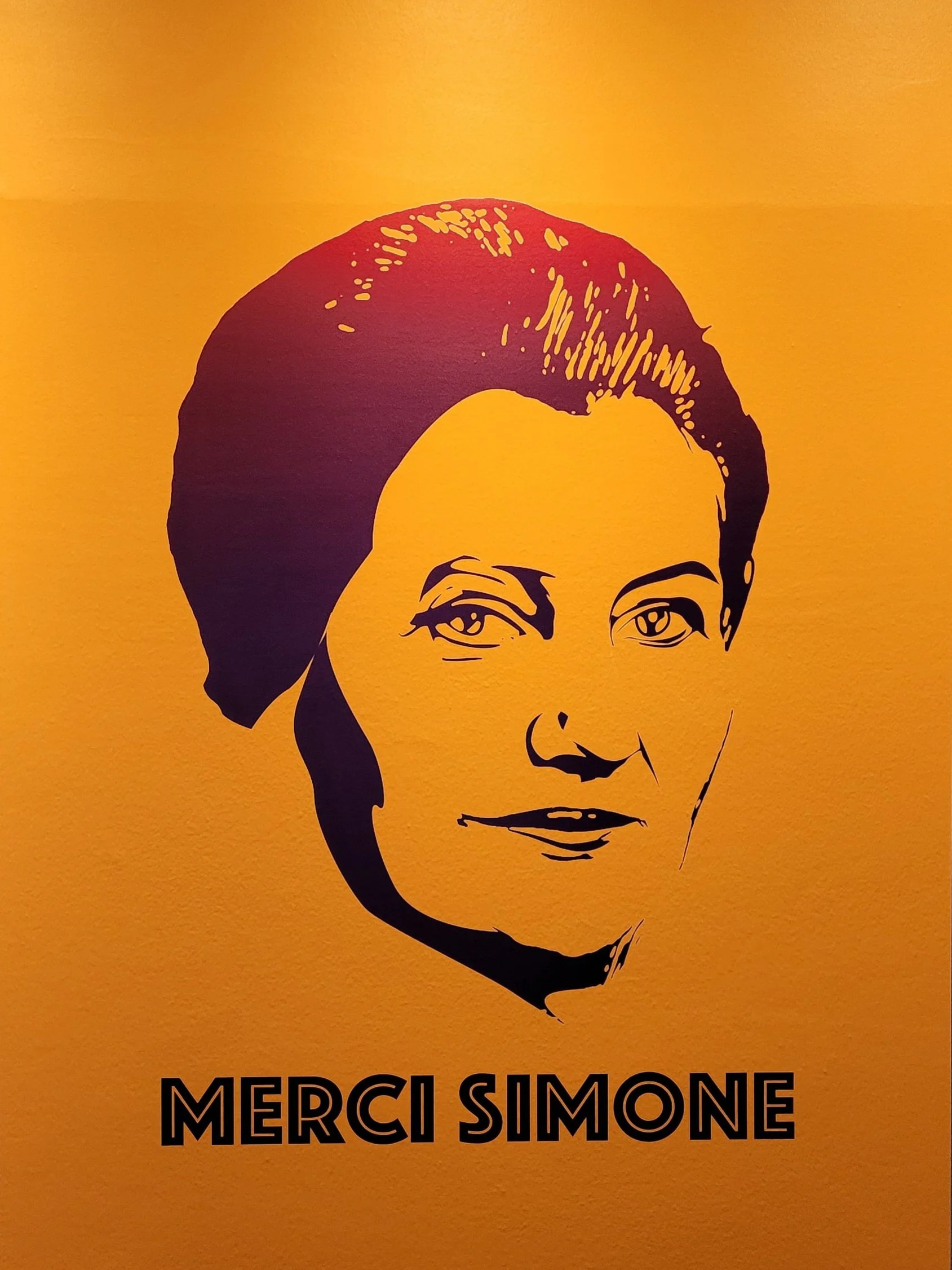
In 1974, Simone Veil, made a fervent speech before the National Assembly to decriminalize abortion in France. Abortion was once a crime in most of the United States just like it was in France. Today, however, abortion is becoming a crime again in the United States.
Annie was a university student from provincial France who wasn’t ready to become a mother. It was 1963, the birth control pill wouldn’t be authorized for another four years. Abortion was still a crime. Betrayed by her doctor, friends, and the man who got her pregnant, Annie struggled to keep her secret from her parents and roommates. Annie first tries to terminate the pregnancy herself, in vain. She then seeks the assistance of a faiseuse d’anges—figuratively a maker of angels, literally an illicit abortionist—who fails to induce a miscarriage. At twelve weeks, Annie’s health, her studies, and her future all hang in the balance.
Finally, on the third try, Annie’s abortion was completed but it nearly cost her life. Though she could have been almost any woman in France, Annie is the protagonist in L’Événement, a semi-autobiographical novel by Annie Ernaux (Gallimard, 2000). The book was adapted into a movie of the same name directed by Audrey Diwan. Translated as Happening, it gives a frank account of the profoundly intimate quandary that Annie faced, just like scores of French women seeking abortions at the time.
In 1971, Nouvel Observateur published a petition calling for the legalization of abortion in France. The magazine had published the names of 343 women who admitted to having abortions. It was a crime just to sign and publish the petition. By then, up to a million women were estimated to have had clandestine abortions in France. The following year in Bobigny just outside Paris, a court convicted five women, including an underage rape victim, of illegal abortion. Journalists and authors wrote about the trial, defying a law that banned coverage of abortion debates in the press. The criminalization of abortion in France was at best hypocritical and at worst plain cruel. The time for institutionalized misogyny had to end.
In 1974, Simone Veil, made a fervent speech before the National Assembly to decriminalize abortion in France. As health minister who had just helped improve access to contraception in France, Veil implored members of Parliament to face the facts about illegal abortions. Not all women could afford them. Those who did, along with anyone who aided them, risked fines or imprisonment. Some women even boarded charter flights to countries where they could get an abortion legally. An estimated 300,000 abortions occurred each year in France. The abortion law was unevenly applied and it was impossible to prosecute all cases.
Veil reminded her audience that these women were neither immoral nor reckless with their pregnancies; they were simply suffering. To force them to endure unwanted pregnancies was an injustice in itself that had to end. Veil was describing the many real Annies of the time: “Currently, those who find themselves in this situation, this distress, who worries about them? The law not only leaves them to shame and solitude, but also to anonymity and the anguish of lawsuits. Forced to hide their condition, they all too often find no one to listen to them, to help them understand, and to bring them support and protection.”
By disassociating abortion from crime, Veil framed the debate as a public health issue. The government’s priority would turn from the prosecution of women to their protection. The decision to terminate a pregnancy would become one between a woman and her doctor. It would give the medical establishment a legitimate role to play with a woman’s reproductive decision instead of the police.
Parliament passed the abortion decriminalization law in January 1975. Originally scheduled to expire in five years, the law was extended indefinitely and has since been amended multiple times. As of March 2022, public health law now requires that any woman may request an abortion from a doctor or midwife in a medical establishment before fourteen weeks of pregnancy. She must also be presented with the different methods of abortion and allowed to freely choose one. Differences in consultations for pregnant minors exist though no additional limitations to an abortion are placed on them. Costs are also assumed by the government, though interestingly, Veil originally argued against such. (Whether this was a ploy to get conservative MPs to vote for the law is uncertain.) Importantly, the law now also punishes those who seek to dissuade or prevent a woman from getting an abortion.
In France, abortion access began with its decriminalization by the legislature. That access has been sustained, and even expanded almost over fifty years. During roughly the same time in the United States, a very different trajectory took place. Instead of lawmakers decriminalizing abortion, cases have been brought to the courts to argue for its permissibility. Ultimately the Supreme Court’s decision in Roe v. Wade (1973) granted women across the United States the right to abortion. Roeframed abortion as a right to privacy under the Fourteenth Amendment. That right was affirmed in Planned Parenthood of Southeastern Pennsylvania v. Casey (1992), which removed certain state restrictions on abortion access. It was in the judiciary that the right to abortion was granted in the United States and it was there that the right was recently taken away in Dobbs v. Jackson Women’s Health Organization (2022).
It is commonly thought this was the first time in American history that a right had been taken away by the judiciary. The Court’s conservative justices asserted that a right to abortion never existed either explicitly in the Constitution nor as precedent under Roe or Casey would imply. “Until the latter part of the 20th century, there was no support in American law for a constitutional right to obtain an abortion. No state constitutional provision had recognized such a right. Until a few years before Roe, no federal or state court had recognized such a right (…) By the time the Fourteenth Amendment was adopted, three-quarters of the States had made abortion a crime at any stage of pregnancy. This consensus endured until the day Roe was decided.”
Abortion was once a crime in most of the United States just like it was in France. Today, however, abortion is becoming a crime again in the United States. Twelve states now prohibit abortion with at least as many now set to enact similar bans. Antiabortion activists in the United States have their sights set on reviving the Comstock laws of the 1870s, which banned publication and distribution of materials about contraception, abortion, even anatomy. This infringement on access to reproductive information and resources is just like what France removed from the books a quarter century ago. To say the United States is regressive when it comes to abortion rights is a tragic understatement.
Incidentally, the Supreme Court’s decision prompted calls by some in France to have abortion codified as a constitutional right there. French Parliamentarians have introduced related bills, which won’t be taken up until Fall 2022 at the earliest, and their fate seems uncertain. A record high number of representatives from Marine Le Pen’s far-right Rassemblement National gained seats in the latest parliamentary elections. Though Le Pen has stated she supports access to abortion, others from her party echo their American counterparts for a repeal of France’s abortion laws. Veil herself specified that the 1975 law would not grant a right to abortion, though subsequent amendments to the law suggest otherwise. Whether the additional step of codifying abortion as a constitutional right in France is necessary or even feasible is yet to be determined.
Since the Veil Law and each of its amendments, the French have been speaking on abortion through their elected representatives in the legislature. In the United States, by contrast, Americans had to rely on abortion access as interpreted by the judiciary. In its reversal of Roe and Casey, the Supreme Court now flaunts its conservative predilections and shows brazen willingness to remove rights, and this despite popular support to the contrary. Even if a Democratic majority in the House of Representatives could muster a bill to reinstate abortion access across the country, a sufficiently large minority of Republicans in the Senate could still prevent the bill from even coming up for debate. Meanwhile, the executive branch finds itself with few options, and can only permit abortion to those women under its jurisdiction, such as Federal government employees or prisoners. What was once a right for all American women is once again a crime depending on which state they live in.
Abortion now returns to the states where even more contestation, as well as unwanted pregnancies and the risk of criminal punishment, are likely. State legislatures will enact abortion laws that will from protection to prohibition. State and Federal courts will surely hear new cases on the matter in the years to come, trying to resettle what had once been thought settled law. When they do, they might heed Simone Veil’s concluding remarks to the National Assembly in France nearly a half century ago: “History shows us that the great debates that once divided the French appear with the passage of time as a necessary step in the creation of a new consensus, which is part of the tradition of tolerance and moderation in our country.”