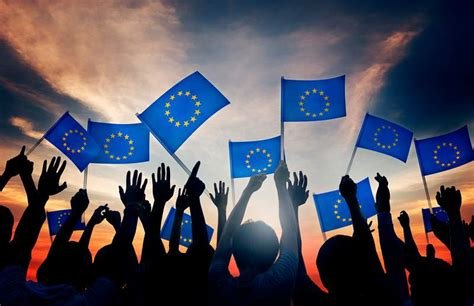
Free People Are Looking to Europe to Lead
Free people in the world are looking to Europe to lead. So argues, Jean-Noël Barrot, French Minister for Europe and Foreign Affairs. He is right, but we need to hear more of this coming from Brussels rather than Paris.
Free people in the world are looking to Europe to lead.
So argues, Jean-Noël Barrot, French Minister for Europe and Foreign Affairs who gave a talk at the School of International and Public Affairs at Columbia University yesterday. Barrot is right. The United States can no longer claim to be the leader of the free world while it suppresses freedom among its adversaries abroad and at home. He even quoted the mathematician-philosopher Blaise Pascal: “Justice without force is powerless. Force without justice is tyranny.”
One of Barrot’s predecessors, Hubert Védrine, once labeled the United States a hyperpower for its unrivaled economic and military strength in the post-World War II era. Americans like to think of freedom as the main cause of this strength. Indeed, it sustained growth and saw the fall of the Soviet Union. However, and as Barrot rightly reminded his audience, at the same time the United States could claim to be the world’s lone superpower at the turn of the century, China was beginning its steady climb on the global economic front, freedom be damned. China’s growth in the military front now seems likely, if not inevitable, to rival the Americans.
Barrot challenges this singular vision of geopolitics today as rivalry between the incumbent superpower and the rising (or returning) superpower. Europe is refusing to choose between these two blocs, according to Barrot, and is instead charting a third path by building on its democratic strengths. In this way, the world will turn to Europe.
Barrot left beside the actual likelihood of China fully eclipsing the United States in military power or the plausibility of a multipolar world especially in terms of economic relations. His focus instead was on democracy and the role Europe will bring to bear on it as a stabilizing force.
It would be aspirational to think of Europe as the world’s beacon of democratic stability and strength. However, the challenge to reaching this goal ignores the importance of multipolar democracy. Canada, Australia, New Zealand, India, Japan, and many other nations across the world might not individually rival the United States or Europe for their economic power. They certainly do not in terms of military power. But they do offer other havens of democracy that neither the United States or Europe seem particularly sure of maintaining right now.
The same Europe that has basked in over eighty years of peace and stability may not be as peaceful and stable as we would like to think. The moderator, the esteemed statesman and professor Jean-Marie Guéhenno, quickly pointed to the wave of nationalism across the continent as an example. If that were not enough, the Russian war in Ukraine and the Trump administration’s hostile stance toward NATO and most European allies suggest it is time for EU member states to finally get serious about building a common defense policy.
The development of European sovereignty, as Barrot argued, is an important step to reach that goal. However, it will rely not only on national budgets if they can afford it but also on rebuilding democracy both within member states and across the European Union’s institutions. As part of that process, it will be essential to give voice to a democratically-elected European leader to speak on behalf of Europeans. Too often, we hear France speaking for Europe instead of speaking with Europe. It would be refreshing to hear how Europe will one day be a stalwart of democracy—the world certainly needs it—coming from Brussels rather than Paris.

Glass Houses
It’s pretty easy to mock the French government right now. However, throwing proverbial stones has already gotten Americans, Democrats and Republicans alike, into enough serious trouble. Perhaps it’s time for them to build a more solid house than one made of glass.
It’s pretty easy to mock the French government right now. Sébastien Lecornu was prime minister for barely a month. By the time he named all the members of his cabinet, it collapsed fourteen hours later and broke another record of shortest-lived French governments.
Lecornu’s immediate predecessor had lost a confidence vote over his budget proposals and the “Block Everything” social movement that opposed them. Lecornu fared no better. He was just the latest in line—eighth to be exact—of prime ministers under President Emmanuel Macron whose legitimacy is disappearing as quickly as members of his party. Then parliament had a sense of déjà vu when Macron promptly reappointed Lecornu as prime minister. How long the Lecornu II government will last is anyone’s guess.
The American press is right to call it political chaos, crisis, deadlock, disarray, impasse, turmoil, so on and so on. Yet never has the expression about people in glass houses throwing stones been more appropriate. Members of the Congress have shut the United States government down once again.
While both the French and American political circumstances stem from fights over the national budget in their respective legislatures, only the US government actually shut down. This curtails services provided by Federal agencies as well as the pay of their employees. Members of Congress, ironically, still get paid even when they don’t work toward a compromise or anything else.
In France, however, the government continues to operate and public employees still get paid for their work while political battles play out. That doesn’t mean France can continue to ignore its budget approval process. But the country’s public service and citizens are not hostage to any party’s political scores. Meanwhile the US is on its eleventh government shutdown in history, the last three of which have been under Donald Trump. And like the situation in France, the end of the US government shutdown is anyone’s guess.
Americans can blame the shutdown on whomever they want but it might help instead to look to how other countries face a budgetary crisis. The French government is definitely in one, but at least it’s still open. And though Americans don't have a parliamentary system, they could still demand the impeachment—a vote of no confidence of sorts—of any president or lawmaker willing to shut the US government down. In the very least, they shouldn’t think their political leaders are somehow more righteous than French ones.
Benjamin Franklin is credited with publishing a variation of “people in glass houses shouldn’t throw stones.” The origins of the adage trace back even further to the 14th century to Chaucer’s Troilus and Criseyde. Written in Middle English, the poem uses the word of French origin for glass, verre, since it rhymed with werre, also from Old French meaning war or conflict: “And for-thy, who that hath an heed of verre, Fro cast of stones war him in the werre!” Flash forward to the 20th century, Billy Joel released an album titled Glass Houses whose cover featured the singer about to throw a stone at a glass house, his own in fact. (The album also features a song in French, C’était toi.) The original message about hypocrisy may have given way to one about real danger.
Indeed, throwing proverbial stones has already gotten Americans, Democrats and Republicans alike, into enough serious trouble. Perhaps it’s time for them to build a more solid house than one made of glass.

A crack in the mirror of democracy
With the French presidential election of 2022 now over, a look across the Atlantic is like looking into the mirror. We see a country torn apart, led by a centrist president who’s barely popular who managed to beat out his populist rival. We see a president uneasy about the upcoming legislative elections and what they mean for implementing any coherent policies. We wonder if this president will be able to stitch the country back together, let alone heal the economy, put Covid behind us for good, confront Russia without starting a world war, provide leadership among allies, and still hold up the nation as a beaming example of democracy. It’s a tall order.
The demographic divide is real, both in France and in the United States. And it’s looking a lot like a crack in the mirror.
With the French presidential election of 2022 now over, a look across the Atlantic is like looking into the mirror. We see a country torn apart, led by a centrist president who’s barely popular who managed to beat out his populist rival. We see a president uneasy about the upcoming legislative elections and what they mean for implementing any coherent policies. We wonder if this president will be able to stitch the country back together, let alone heal the economy, put Covid behind us for good, confront Russia without starting a world war, provide leadership among allies, and still hold up the nation as a beaming example of democracy. It’s a tall order. Here’s how the numbers played out in French-American comparison.
Emmanuel Macron won the second round of the 2022 presidential election with 58.5% of votes, becoming the first French president in twenty years to be re-elected to a second (and final) five-year term. Far-right rival Marine Le Pen struck out in her third attempt at the presidency, but with a historic high of 41.5% of votes. Left-wing Jean-Luc Mélenchon was just behind Le Pen after elimination in the first round, leaving many pollsters wondering how his voters would go. Though enough voters turned out for Macron, the overall abstention rate was still high at 28%. Of those who still voted, about 8% cast blank or invalid votes (1).
In the 2020 American presidential election, Joe Biden won the popular vote with 51.3% and 306 electoral votes. Biden won by both measures, unlike George W. Bush in 2000 and Donald Trump in 2016, who lost the popular vote but won the electoral college. In 2020, Trump won 46.9% of the popular vote and 232 electoral votes(2). 67% of Americans turned out to vote (3).
The similarities between France and the United States are striking: just about two-thirds of voters in France and the United States voted in their most recent presidential elections. Yet both countries are sorely pulling apart at the seams.
Some in the French media even compared this election in France to the American presidential election of 2020. There is more than a kernel of truth to this. Urban, educated, and wealthier people tended to vote for Macron/Biden whereas rural, manual laborers, and the poorer tended to vote Trump/Le Pen. (Note that data on race is technically not collected in France, though by reasonable estimates, those identifying as white tended to favor Trump/Le Pen.) The demographic divide is real, both in France and in the United States. And it’s looking a lot like a crack in the mirror.
1 https://www.resultats-elections.interieur.gouv.fr/presidentielle-2022/FE.html
2 https://www.presidency.ucsb.edu/statistics/data/voter-turnout-in-presidential-elections
3 https://www.census.gov/library/stories/2021/04/record-high-turnout-in-2020-general-election.html