
Assessing French language on paper or computer
Is paper or computer better for assessing L2 students’ writing? This article shares observations from several French classes at an American high school in which assessments that were otherwise identical were offered to students on both paper and computer.
My article, “Exploring the Impact of Handwriting vs. Keyboarding on L2 Assessments: Biases, Integrity, Authenticity, and Literacies” shares observations from the French classroom.
Abstract
“Is paper or computer better for assessing L2 students’ writing? The ineluctable transition to technology might suggest this question has already been answered. However, the technology divide in L2 assessments may have indeed widened since the pandemic: whereas some teachers have fully embraced technology in assessments as in instruction, others are reluctant to eliminate paper, owing to concerns about the reliability, integrity and authenticity of L2 production on computer. This article shares observations from several French classes at an American high school in which assessments that were otherwise identical were offered to students on both paper and computer. These observations revealed several overlapping areas of L2 research that merit further consideration, including instructor bias between media, academic integrity of student work, and the need to align the technological literacies between instructors and students. The reflection that follows points to specific directions for further empirical research on the effects of input medium on L2 learners in K-12 and higher education.”
America, the Nouvel Ancien Régime
This year marks the 235th anniversary of the start of the French Revolution. With each passing year, the ancien régime creeps further into a distant past. Yet the lessons to be learned from it are stronger than ever. By comparison, the past seems eerily analogous to the United States today. And if that past is any guide, Americans might want to brace themselves for more turbulent times well past Election Day.
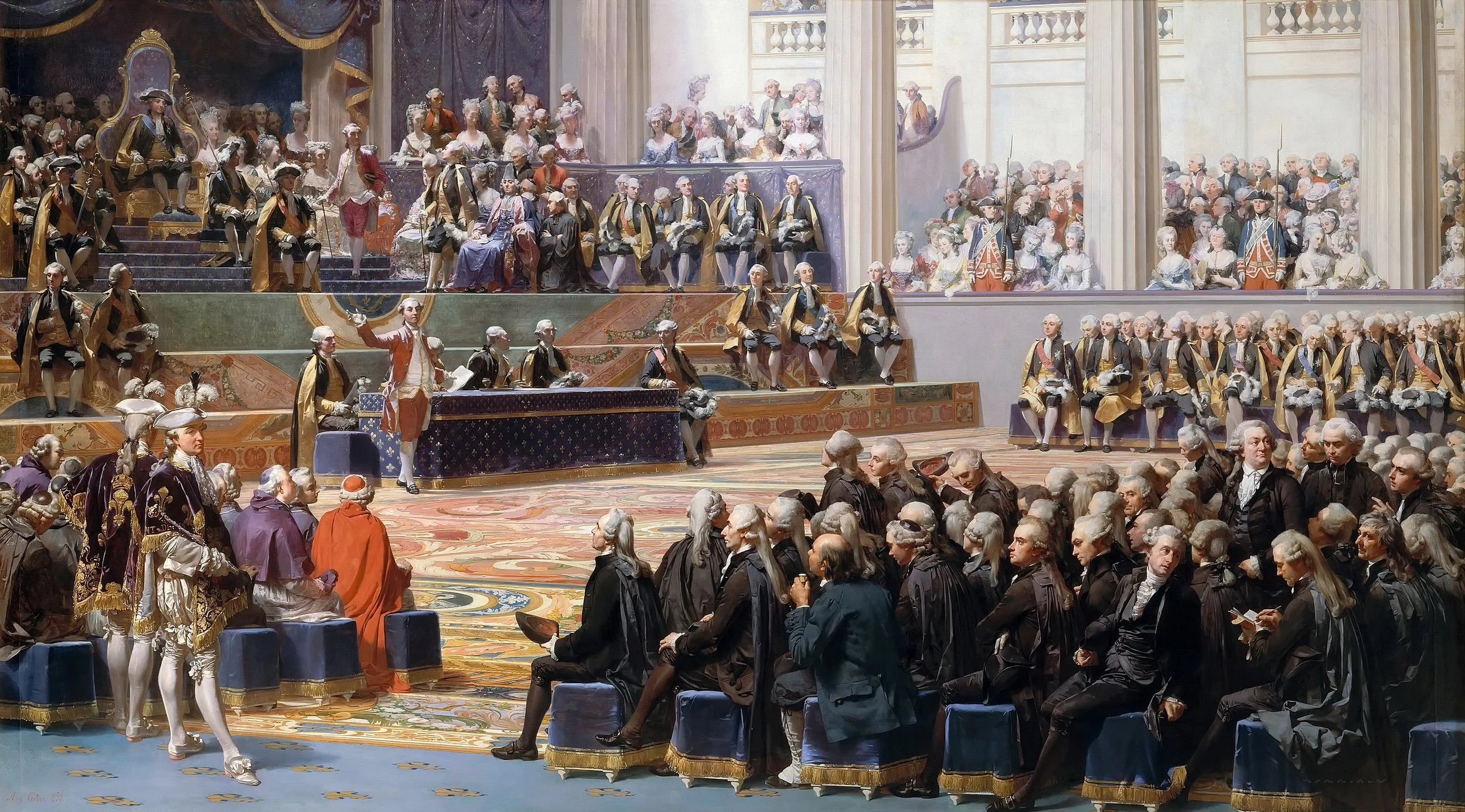
This year marks the 235th anniversary of the start of the French Revolution. With each passing year, the ancien régime creeps further into a distant past. Yet the lessons to be learned from it are stronger than ever. By 1789, the monarchy had already decayed into a financially and morally bankrupt vestige of ceremonial rule. Its public finances were in disarray with a colossal debt borne of state largesse and military expenditures. International rivals were poised to replace France as a world power. Domestic grievances were multiplying almost as fast as the inequalities between social classes. With the convening of the Estates General that fateful spring, France found itself in an impossible situation. Members of the highly unrepresentative body soon realized they were incapable of resolving the crises at hand and of reforming the country’s governance. It was already too late: a convergence of factors would spell the end of the ancien régime in France. By comparison, the past seems eerily analogous to the United States today. And if that past is any guide, Americans might want to brace themselves for more turbulent times well past Election Day.
Each of the three estates of the ancien régime finds a similar counterpart in American society today. For starters, the clergy in prerevolutionary France propped up the Catholic nobility while deriving certain privileges from it. A religious class in the United States operates a similar program today. Although far from having the same authority that the Catholic Church held during the ancien régime, the Christian right in the United States has a similarly outsized influence on national and state policy. With rare exception, it stokes sympathy in the White House, Congress, and the Supreme Court. It pushes Federal and state legislation including religious liberty laws and exemptions under the guise of “sincerely held beliefs.” It has created a litmus test for the nation’s highest offices, and promotes the myth that the United States is an inherently Christian country. Politicians across the United States regularly invoke God in public forums with impunity, legitimizing the public sphere as an extension of the pulpit.
From restricting reproductive rights and sex education, banning books in libraries, or even refusing to conduct business with parties they perceive as a threat to their identity, America’s first estate actively seeks the government to do its bidding. Private companies can now exercise religious beliefs, such as by denying employer-sponsored health insurance if those policies allow for birth control. School vouchers can take public money and send it to private religious schools. Efforts are underway in multiple states to bring prayer, Bible study, and even displays of religious symbols like the Ten Commandments into public schools. Privatization of the criminal justice system has tied prison reform to evangelical programs. In addition to its assault on basic freedoms, the Christian right also benefits from a goldmine of tax exemptions. All manner of religious organizations—churches, schools, and charities—as well as their leaders can advance their beliefs with broad-based taxpayer support, whether or not Americans even agree with them. This Christian overreach betrays America’s religious diversity, especially that of its largest group, those who identify with no religion.
In addition to the first estate, the United States also has its own version of the second estate of the ancien régime. The upper echelons of government are far removed from the rest of the population to adequately represent their interests. It costs millions just to run for the nation’s highest offices, setting a steep price for admission to American political nobility. The noblesse de robe of today is rewarded for campaign contributions with presidential appointments to senior government positions, while relegating what remains of meritocracy in the civil service to lowly bureaucrats. And just as the French nobility doled out privileges to fellow elites, so do members of the Congress in the form of appropriations to pet projects in their home states.
America’s second estate controls not only the wealth and resources behind government but behind private industry as well. Its titans earn incomes that exponentially outpace those on the lower rungs of their corporate ladders. The heads of academia and major “nonprofit” organizations are close to the top as well. The gap between the top ten percent of the wealthiest American and that of the average American is now exponentially wide. By almost any measure, the real incomes of middle-class families have declined over the last five decades while those of low-income families have stagnated. Only the upper class has seen its real income grow during the same time, even after the Great Recession and the Covid pandemic. Which is not to overlook the fact that the wealth gap is exacerbated by gender and race. The cost of education, healthcare, housing, childcare, and even food is now so high that many Americans find that paying for these essentials cripples them with insurmountable debt.
In addition to the elite professional class are the many rentiers who live off inherited wealth and dispose of more money and leisure time than most Americans could imagine. An inner circle of attorneys and accountants abets the American second estate in avoiding the tax burden that non-elites must bear. Though their methods and names of taxes surely differed, the French nobility also practiced this intentional conceit of passing their fiscal duty on to the lower classes. For all its privilege, today’s American aristocracy would have felt right at home in Versailles before the Revolution.
What is the Third Estate, the Abbé Sieyès famously asked of his fellow Frenchmen? His answer was the vast majority of French whose economic inequality was matched by their political inequality. The answer today can be found in the vast majority of Americans. They have nothing in the political order because government offices are reserved for the elite. Parties choose which candidates to support from gerrymandered electoral districts. Both American political parties have interests that are elite interests. Though Democrats might claim to represent the welfare of the masses, especially those of the disadvantaged, its leadership is a bumbling dynasty that exploits minority interests to win elections without changing much. At the same time, Republicans have demonstrated mass appeal while brazenly overturning democratic norms in order to fulfill their party’s narrow objectives. Worse yet, presidential candidates today are determined by less than ten states, most of which are among the least populated in the country. Democrat and Republican form two sides of the same coin whose value now is measured less by real power than by ritualistic displays of authority.
So-called equal representation in the United States Senate disproportionately reflects the numbers of states rather than that of their citizens. Residents of the nation’s capital don’t even get a voting member of Congress. Recalling similarly disproportionate voting rights among the delegates at the Estates General in Versailles in 1789, it’s not hard to see just how unrepresentative the United States government is now.
Competing factions of representatives represent not the people writ large, but rather the interests of their parties and lobbyists. From the accounts of millionaires and billionaires, or corporations that manage their money, cash flows right into the political apparatus. Whether it buys political office, policies, or mere influence, political contributions stash money that could otherwise go to improvements in transportation, security, housing, education, environmental protection, or a host of other areas that would directly benefit the broader American public. The list of doléances is long but who can the American people reliably turn to if not their representatives? Certainly not the judges. That unelected crew almost predictably interprets the law to suit their own politics and are only accountable to their political allies.
Alexis de Tocqueville once described democracy as a society of peers, une société de semblables. It’s what he admired about the young American republic in the early nineteenth century. It was a model for modern democratic republics, the very opposite of the ancien régime. How the tables have turned. For the American elite, privilege and honor abound, or at least their veneer still does. Just like the French elite under the Bourbon kings, the United States has become deluded by grandeur with the thinking its nation is a beacon to the rest of the world.
Yet where the United States today most resembles prerevolutionary France is in its inability to reform itself. While some revolutionaries just wanted to reform the monarchy, others wanted to swap out the entire regime for another. What most could agree on was that the status quo could no longer last. The rest is history, so to speak. As for the United States today, will the nouvel ancien régime face a similar fate? Could it transition to authoritarianism, oligarchy, theocracy, anarchy, something else? One cannot be certain at this juncture, but if the United States should follow a path to revolution after November, the reasons behind it should come as no surprise.
Image credit: Auguste Couder, Ouverture des États généraux à Versailles, 5 mai 1789, Versailles, Musée de l'Histoire de France, 1839.

The Olympics head from Paris to LA
The passing of the Olympic torch from Paris to Los Angeles was a fitting end to this summer’s games. It shed a light, so to speak, on just how much the games have become Disneyesque.
The passing of the Olympic torch from Paris to Los Angeles was a fitting end to this summer’s games. It shed a light, so to speak, on just how much the games have become Disneyesque. Paris was the attraction itself and, from opening to closing, was made for TV. As the choreographed flotilla of nations came down the Seine, you could almost hear “it’s a small world after all.” Instead on animatronic children waving to the onlookers, of course, were live athletes. They were joined by some of the world’s best known performing artists. The opening ceremony was a feast of entertainment from the lesser-known (who knew France had a heavy metal band?) to A list celebrities performing against literally monumental backdrops.
The glitz didn’t end on Day 1. Throughout the games, the City of Light was certainly alight under the glow of stars in town. When the stars weren’t performing on makeshift stages, they showed up in the stands, striking just the right poses for the cameras and Instagram. Athletes themselves became stars, corporate sponsors in the wings ready to sign advertising partnerships. Paris pulled off an amazing feat of hosting thousands of athletes and tourists who came to watch and be watched. Not that the city needed to advertise itself as a tourist destination. And yet Paris 2024 became the brand of the summer.
Like Disney, it’s not enough to pay to watch its shows or enter its theme parks. You need to buy the merch, too. Which might explain why local businesses complained the tourists spent less on what Paris has to offer in its cafés and shops and more on Olympics offerings instead. Meanwhile, the locals didn’t seem to care much for the pumped-up fame. Many Parisians even skipped town beforehand. Who could blame them? You needed a QR code to get into reserved areas of town then wait hours just to enjoy a few minutes of an attraction. Pretty much like at Disney.
That’s just what seemed so fake about Paris 2024. The Olympics used the city, not even its people, as a prop. For a few weeks, Paris replicated itself as an imaginary place where dreams do come true. The effect was real to be sure, measured in euros spent and metals earned. To match the stunts of the opening ceremony was one in particular. And who better to upstage Tinkerbell in a descent from a rooftop than Tom Cruise making a heroic landing among the fans to close out Paris 2024 happily ever after.
Now it’s the City of Angels’ turn to take up the next round of Olympic mania. The sprawl of entertainment factories from Anaheim to Hollywood are already gearing up for 2028. It might be a homecoming of sorts for the Olympics, too. LA is not known for its sites like Paris so much as what it makes for entertainment. It’s a city of imagination where imaginary worlds come to life and where real-world problems exit the scene. It’s a place that manufactures for consumption. LA has been doing this sort of thing for decades and Paris has now finally caught up. Whereas LA created a home for Disneyland, Paris actually became one.
The Organization of Aid
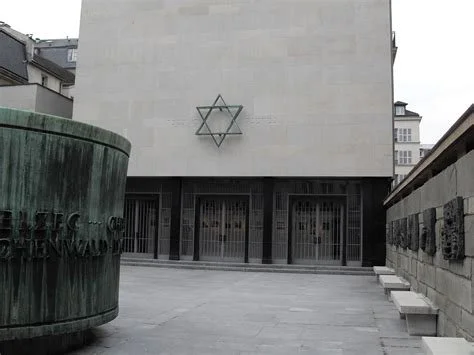
During a recent visit to the Mémorial de la Shoah (Holocaust Museum) in Paris, I caught a temporary exhibition on the role of foreigners in the French Resistance. It was a discovery of some of the people born outside France who helped save those persecuted inside it during the Occupation. Many of these champions of freedom are probably unknown to most Americans, but two of those featured in the exhibit were in fact American: Varian Fry and Tracy Strong, Jr.
During a recent visit to the Mémorial de la Shoah (Holocaust Museum) in Paris, I caught a temporary exhibition on the role of foreigners in the French Resistance. It was a discovery of some of the people born outside France who helped save those persecuted inside it during the Occupation. Many of these champions of freedom are probably unknown to most Americans, but two of those featured in the exhibit were in fact American: Varian Fry and Tracy Strong, Jr. I wrote up a piece on them for an NYU class I took on immigration to France. (I owe my gratitude to the professor and a friend for their feedback; any errors in the revision remain mine.) Below is the piece in French, which both Fry and Strong spoke fluently.
L’ORGANISATION DE SECOURS
Dans l’histoire de résistants d’origine américaine, Joséphine Baker se distingue particulièrement. Entrée au Panthéon en 2021 tant pour ses activités de résistance que pour ses contributions artistiques au rayonnement de la France, son pays adopté, elle fut récemment accompagnée l’an dernier d’un autre résistant qui fut lui aussi d’origine étrangère, Missak Manouchian. Ces grands personnages sont dignes d’un honneur national et sont reconnus également au Mémorial de la Shoah. Ce dernier met aussi en lumière des résistants moins connus. Deux Américains sont actuellement présentés à l’exposition temporaire au Mémorial de la Shoah, Des Étrangers dans la Résistance en France (février-octobre 2024) dont Varian Fry et un compatriote encore moins connu, Tracy Strong, Jr. L’exposition témoigne de l’importance du secours qu’ils portèrent à de nombreux Juifs et exilés du régime nazi.
Le Comité américain de secours (Emergency Rescue Committee) fut fondé à New York en juin 1940 par un président d’université et un syndicaliste. Avec le soutien du Modern Art Museum, des bienfaitrices riches et même de la femme du président des États-Unis, Eleanor Roosevelt, il mit en œuvre un plan de secours pour les exilés politiques, culturels, syndicaux ou intellectuels en France non occupée. Il leur procura des visas d’exception (danger visas) pour ces exilés, des logements sûrs en attendant leur départ ainsi que des financements pour leurs voyages. Au cœur de cette organisation se trouvait Varian Fry, jusqu’alors journaliste chez Foreign Affairs, qui s’établit en août 1940 à Marseille, épicentre des exilés en zone non occupée. Fry se vite mit en relation avec plusieurs collaborateurs de divers profils y compris le résistant et militant socialiste, Daniel Bénédite, le faussaire Bill Freier, des membres du service public français ainsi que le vice-consul américain, Hiram Bingham IV. Fry et son Comité arrivèrent à faire sortir plus de deux mille réfugiés de France parmi lesquels sont le peintre Marc Chagall, l’artiste polyvalent Max Ernst, le sculpteur Jacques Lipschitz, et l’écrivain André Breton. Fry passa treize mois à Marseille, période durant laquelle il écrit son témoignage des efforts du Comité.
Il n’était pas possible de mener ces activités clandestines très longtemps avant que Fry et ses collaborateurs n’aient attiré l’attention du département d’État américain. Par conséquent, le consul général à Marseille désavoua Fry et l’obligea à retourner à New York. Lorsque Fry désobéit à son rapatriement, l’ami du consul général américain et directeur de police à Marseille, Maurice Rodellec du Porzic, menaça Fry d’arrestation et de résidence forcée. Fry accepta enfin de quitter le territoire français. Dans son témoignage publié sous le titre, « Livrer sur demande… », Fry demanda au chef de police : « Dites-moi, franchement, pourquoi vous acharnez-vous sur moi ? – Parce que vous protégez les Juifs et les antinazis. » (Fry 2017, 315).
Le Comité américain de secours échoua dans sa tentative d’aider le philosophe allemand Walter Benjamin à quitter la France. En franchissant la frontière espagnole à Port-Bou le 25 septembre 1940, la police arrêta Benjamin et l’informa qu’il serait renvoyé en France. Ce mensonge tragique conduisit Benjamin à se suicider, craignant d’être remis aux nazis. À peine un an plus tard, Varian Fry suivit ce même chemin à Port-Bou pour se rendre d’abord à Barcelone puis à Lisbonne afin d’embarquer un navire pour New York.
Browning (2023) montre que les secours pendant le régime nazi pouvaient se manifester à la fois sur le plan organisationnel, comme dans l’exemple du Comité américain de secours, et sur le plan communautaire. Ce fut le cas de nombreux résidents du Chambon-sur-Lignon (Haute-Loire) entre 1940 et 1942. Un autre Américain expatrié en Europe, également internationaliste et polyglotte, Tracy Strong Jr., entreprendrait un secours avec les résidents du village. D’abord, Strong se voulut neutre envers l’Allemagne. Protestant et pacifiste, il souhaitait éviter une seconde guerre à tout prix. Mais dès la chute de la Troisième République, Strong s’engagea avec l’organisation YMCA (Young Men’s Christian Organization) à Genève, ville qu’il connaissait de son enfance. Strong fut alors envoyé en Allemagne dans les camps de prisonniers de guerre qui détenaient principalement des soldats français. Au bout d’un an, les nazis refusèrent que l’ennemi continue à travailler sur le sol allemand même dans le cadre d’un organisme « neutre » et le conduisirent à la frontière. Par la suite, Strong s’engagea avec la YMCA à Marseille. Pendant dix-huit mois, entre mai 1941 et novembre 1942, il travailla dans les camps d’internement dans le sud de la France dont Gurs et Rivesaltes, qui hébergeaient des Juifs et des réfugiés espagnols fuyant le régime de Franco. Strong organisait des activités pour tenter de redonner le moral aux internés. Il prit aussi des photographies clandestines de la déportation des Juifs du camp de Rivesaltes.
Avec le soutien de l’European Student Relief Fund, Strong et son ami, le curé protestant André Trocmé, fondèrent la Maison des Roches au Chambon-sur-Lignon pour les Juifs et autres réfugiés. Les deux amis étaient convaincus qu’ils auraient un impact plus important sur les réfugiés en dehors des camps d’internement. Strong organisa alors la libération de plusieurs internés des camps pour les installer à la Maison des Roches au printemps 1942. Avec l’expansion des rafles dans le Sud de la France, Strong retourna en Suisse où il réussit à procurer des visas pour vingt-et-un réfugiés juifs. Pour cinq autres réfugiés qui furent refusés à la frontière et renvoyés à Rivesaltes, Strong leur procura finalement des visas pour pouvoir entrer en Suisse et éviter la Solution finale. Comme Fry, Strong documenta beaucoup ses activités, bien qu’avec moins de fréquence et de détails. Ses documents personnels de cette période montrent un degré influent d’organisations à titre humanitaire—dont vingt-neuf au total—qui opérèrent dans la zone non occupée et sans pareil dans le reste de l’Europe nazie (Browning 2023). Strong lui-même ne pouvait pas quitter la Suisse entre 1942 et 1944, mais une fois autorisé à sortir, il s’engagea tout de suite dans l’armée américaine à Londres. L’ancien pacifiste se transforma en combattant.
Varian Fry et Tracy Strong sont-ils dignes du nom résistant ? De héros ? Certains pourraient soutenir l’idée que ni l’un ni l’autre ne furent assez pour sauver plus de Juifs et d’autres exilés. Le nombre d’Européens sauvés par le Comité américain de secours ne représente qu’à peine la moitié des réfugiés antifascistes en France (Grynberg 1999, 192). Pour sa part, Strong n’en a même pas atteint une trentaine. Cependant les faits historiques nous rappellent les contraintes auxquelles ces hommes durent faire face. Une fois que les Etats-Unis entrèrent en guerre fin 1941, tout Américain en zone occupée aurait été considéré suspect et potentiellement détenu. Et la division entre France libre et France occupée eut dissout en 1942. Fry et Strong ne purent pas rester en Europe plus longtemps, mais cela n’aurait pas minimisé les actes humanitaires qu’ils menèrent. Peut-être conviendrait-il mieux de les appeler simplement des hommes qui firent ce qu’ils pouvaient dans une situation difficile avec les moyens dont ils disposaient. Et la conséquence de leurs actes était non négligeable : sauver bon nombre de Juifs et exilés tout de même. Le nombre des Européens enlevés des mains des nazis par Fry et Strong n’est pas dans les millions mais pour ceux et celles qui furent sauvés, c’est le seul nombre qui compte.
Par ailleurs, c’est grâce à Varian Fry que le Comité américain de secours put organiser des visas au moins pour certains Européens. Oui, des artistes de renommée. Mais le Comité n’aurait forcément pas pu faire de même pour des gens « ordinaires » qui ne pouvaient en aucun cas solliciter un visa d’exception. Il faut se rappeler aussi que les Etats-Unis jugeaient inacceptables les communistes : Missak Manouchian n’aurait pas eu de chance pour y aller. C’est aussi grâce à Fry que nous avons un témoignage du travail important du Comité américain de secours. Pour Strong, nous avons d’autant plus : preuve que les transferts depuis les camps d’internements français vers Drancy et l’Est eurent bien lieu. Entre journaux personnels et photos inédites, Fry et Strong firent de l’historiographie qui contribue à l’enrichissement des savoirs sur la Shoah.
Jabonkla fait remarquer que la mémoire de la Shoah est d’une part « universalisation de la mémoire » et d’autre part « renouvellement permanent des modes de souvenir et de transmission » (Jablonka 2013, 104). En effet la Shoah intégra toutes les victimes dans son histoire. Le Mémorial de la Shoah fait bien de commémorer Varian Fry et Tracy Strong, et leurs collaborateurs, en les regroupant parmi ceux que l’on peut appeler à juste titre résistants d’origine étrangère.
RÉFÉRENCES BIBLIOGRAPHIQUES
Browning, Christopher. 2016. “From Humanitarian Relief to Holocaust Rescue: Tracy Strong Jr., Vichy Internment Camps, and the Maison des Roches in Le Chambon,” Holocaust and Genocide Studies 30, no. 2 (Fall): 211–246. https://doi:10.1093/hgs/dcw031.
— — —. 2023. “An American in Germany: Fall 1940,” The Journal of Holocaust Research, 37 no. 1: 88-94. https://doi.10.1080/25785648.2022.2153979.
Fry, Varian. 2017. « Livrer sur demande… » Quand les artistes, les dissidents et les Juifs fuyaient les nazis (Marseille 1940-1941). Traduit de l’anglais par Édith Ochs. Marseille : Agone.
Grynberg, Anne. 1999. Les camps de la honte : les internés juifs des camps français 1939-1944. Paris : Éditions La Découverte.
Jablonka, Iva. 2013. “À nouvelle histoire, nouvelle mémoire.” Dans Nouvelles perspectives sur la Shoah, édité par Ivan Jablonka et Annette Wieviorka, 91-105. Paris : Presses universitaires de France.

France’s New Prime Minister, essentially
When news broke out earlier this month about Gabriel Attal becoming France’s latest prime minister, the headlines made two things about him stand out.
When news broke out earlier this month about Gabriel Attal becoming France’s latest prime minister, the headlines made two things about him stand out:
“France Gets Its Youngest and Openly Gay Prime Minister,” New York Times, January 9, 2024;
“Gabriel Attal is France’s youngest-ever prime minister at age 34 and the first who is openly gay,” Associated Press, January 8, 2024;
“Gabriel Attal: five things to know about France's young, openly gay prime minister,” Reuters, January 9, 2024.
In case you missed it, France’s prime minister is young and gay!
CNN at least waited for the byline to give it away: “Attal will be France’s youngest-ever prime minister and the first openly gay man to serve in the post – making him one of the world’s most prominent and powerful LGBTQ politicians” (“Gabriel Attal becomes France’s youngest prime minister,” January 9, 2024).
Fox News even pushed Attal’s youth and sexuality to the second and third sentences respectively in their article, “France appoints Gabriel Attal as youngest-ever prime minister following resignation of predecessor” (January 9, 2024).
“Who is Gabriel Attal, the French PM who climbed the ranks in record time?” asks The Guardian (January 9, 2024), which wasted no time answering that question with Attal’s youth and sexuality. Luckily, the article also mentions his education and political background—usual requirements for the job—in later paragraphs.
The Wall Street Journal actually begins its coverage by describing Attal’s previous role as education minister and current popularity as reasons for his appointment in “Macron Appoints Youngest Prime Minister in France’s Modern History” (January 9, 2024).
At 34, Attal is indeed France’s youngest prime minister. He was also appointed by France’s youngest president, Emmanuel Macron. And he replaces Elisabeth Borne, incidentally France’s only second woman prime minister. NPR manages to focus on how Attal’s age matters politically such as how more senior ministers and government officials will work with him (“What to know about France's young Prime Minister Gabriel Attal, who's causing a stir,” January 11, 2024).
Of course, French media also covered Attal’s appointment. Some of their English-language articles mimicked the Anglo-American media’s focus on his youth and sexuality.1 The global outlet TV5 Monde combines Attal’s age and sexuality with the fact that his appointment was part of a government reshuffle in the January 10, 2024 headline, “Qui est Gabriel Attal, le nouveau Premier ministre français ?”
But by far, the French media stayed away from mentioning the new prime minister’s youth and sexuality in the headlines or even much in the articles.2 The focus in the French media, from left- to right-wing, is the prime minister’s position on key issues, whether he will succeed where his three predecessors have failed, or how much he will help steer President Macron’s policies. It’s not even his age itself that seems noteworthy, rather the relatively short time he has spent in previous government roles.
The Anglo-American attention to Attal’s youth and sexuality relates to essentialism, an idea dating back to Aristotlean and Platonic philosophy that identifies basic, immutable characteristics as defining someone. In France today, essentialisme refers to reducing people to such characteristics and not being able to see beyond traits they have no control over. What you do, how you grow and change in your social environment, isn’t relevant. Essentialismmeans who you are is what you are.
Perhaps the difference in how the Anglo-American media and the French media portray the new prime minister reveals something about what each prioritizes. Attal’s youth and sexuality certainly matter. Indeed, it is noteworthy when leaders break traditional barriers to entry to such high-level jobs. However, it’s the priority that the Anglo-American media places on these essential characteristics that distinguishes them from the French media. Which is all the more interesting when you consider the emphasis on identity in the United States lately. And this, despite the fact that none of the American presidential candidates is either young or gay.
1: “Gabriel Attal picked as France's youngest PM,” France 24, January 9, 2024
“Gabriel Attal becomes France's youngest prime minister,” Le Monde with Agence France Presse, January 9, 2024
2: “Gabriel Attal nommé premier ministre à la place d’Elisabeth Borne,” Le Monde, January 9, 2024
“Gabriel Attal à Matignon : au RN, la crainte d’un premier ministre jugé « malin et qui vient sur nos terres »,” Le Monde, January 9, 2024
“Remaniement : nommé premier ministre, Gabriel Attal remplace Élisabeth Borne à Matignon,” Le Figaro, January 9, 2024
“Remaniement: l'irrésistible ascension de Gabriel Attal, communicant hors pair et bon élève du macronisme,” Le Figaro, January 9, 2024
“Gabriel Attal : l’homme pressé de la Macronie, L’Humanité,” January 9, 2024
“Remaniement : Gabriel Attal nommé premier ministre, un « clone d’Emmanuel Macron » à Matignon,” L’Humanité, January 9, 2024
“Gabriel Attal à Matignon, un remaniement pour rien,” L’Humanité, January 9, 2024
Photo credits: Gouvernement français

French literary giants come to the US
Rare is the pleasure to meet two literary giants in one week. Even rarer is that they are the latest recipients of the Prix Goncourt, a top French literary award that has been recognizing exceptional prose for last 120 years, who just happened to be in New York at the same time.
Rare is the pleasure to meet two literary giants in one week. Even rarer is that they are the latest recipients of the Prix Goncourt, a top French literary award that has been recognizing exceptional prose for last 120 years, who just happened to be in New York at the same time.
Mohamed Mbougar Sarr won for his novel, La plus secrète mémoire des hommes, which is now available in English translation as The Most Secret Memory of Men. Brigitte Giraud won for her novel, Vivre vite (Living Fast), which I hope will quickly find its way to English translation. I am sparing plot summaries or reviews here. Suffice it to say that their works deserve greater awareness in the United States.
Both authors came to speak at events in New York. Joining Giraud was Laure Adler, an acclaimed writer, journalist, presidential advisor, and former director of France Culture, a division of Radio France. Incidentally, all three have spent considerable parts of their lives in Francophone Africa: Sarr hails from Senegal, Giraud lived in Algeria, and Adler spent her youth in Guinea and Côte d’Ivoire. These experiences emerge in their writing.
In addition to the authors, the locales of their recent speaking engagements also deserve mention. Sarr spoke at Albertine, a bookstore and event space that is part of the Cultural Services of the French Embassy in New York, perched on 5th Avenue near the Guggenheim and the Frick Collection. A visit to Albertine for its books in French and English is a must.
Meanwhile, Giraud spoke at the Maison Française at New York University, which incidentally is headed by a previous finalist for the Prix Goncourt, François Noudelmann. Though the space is small, it boasts a large literary and cultural footprint in Greenwich Village.
Combined, these writers and their hosts made for an exceptional moment to savor. That these events were free and open to the public is a humble reminder that one does not have to travel all the way to France to enjoy some of its treasures. Merci indeed.

Colorblind in France
While American opinions pour in about what France should do better to confront its racism, it is worth remembering the adage about people in glass houses throwing stones. Many Americans admit that racism persists and should end. What they are increasingly asking for to achieve that goal is something closer to the colorblind French model.
While American opinions pour in about what France should do better to confront its racism, it is worth remembering the adage about people in glass houses throwing stones.
When a police officer in a Paris suburb fatally shot a 17-year-old of North African descent for disobeying an order to stop his car, a fresh wound opened in France. In addition to the loss of the young man’s life, the riots across the country that followed exacted a heavy toll: over a thousand properties damaged or destroyed, over three thousand arrests a third of which were minors—some as young as eleven years old—and over two hundred police officers wounded. Damages are estimated to near 300 million euros, a new record.
On the American right, the likes of Fox and Wall Street Journal were quick to blame the lack of law enforcement, deriding the rioters and siding with the police. They echoed the same views those as on the French right: more law, more order. Meanwhile, the French media reported both the calls for justice for the young man’s life as well as those for calm as the riots continued for days.
Where the difference between American and French coverage of the case differed was largely on the left. In France, many reported how they feel particularly discriminated by police, at times violently so, due to their perceived race. The American left emphasized this point, focusing on the race of the young man killed. (The race of the police officer at the time of this writing remains undisclosed.) They rightly questioned whether race played a role in the officer’s behavior. But some American commentators went further and blamed the incident on France’s colorblind approach to government institutions. One commentator on CNN even called this approach a myth. Indeed, France does not collect data on race as in the US. Nor can it apply laws or policies differently based on race, at least not legally.
The French government views its citizens as equal regardless of race. Its citizens are right to be upset when the government does not uphold that equality. Little wonder then that there has been no call in France to end the constitutional right to equality based on race. Instead, the French demand a reinforcement of this right. There has also been no demand to collect data on race in order to undo institutionalized racism, as some American commentators suggest is necessary. Those same commentators neglect to provide evidence that data on race helps reduce racism in the US.
Death by police is something both Americans and French struggle with, as the more moderate PBS flatly stated. And race is but one factor, sometimes a major factor, in that struggle. But Americans are mistaken to equate the French government’s colorblind approach with racist ignorance. Data on race is different from data on racism. According to latest polls, most Americans supported the recent Supreme Court decision to disallow race as a factor in college admissions. Many Americans admit that racism persists and should end. What they are increasingly asking for to achieve that goal is something closer to the colorblind French model.
A crime no longer in France, but once again in the US
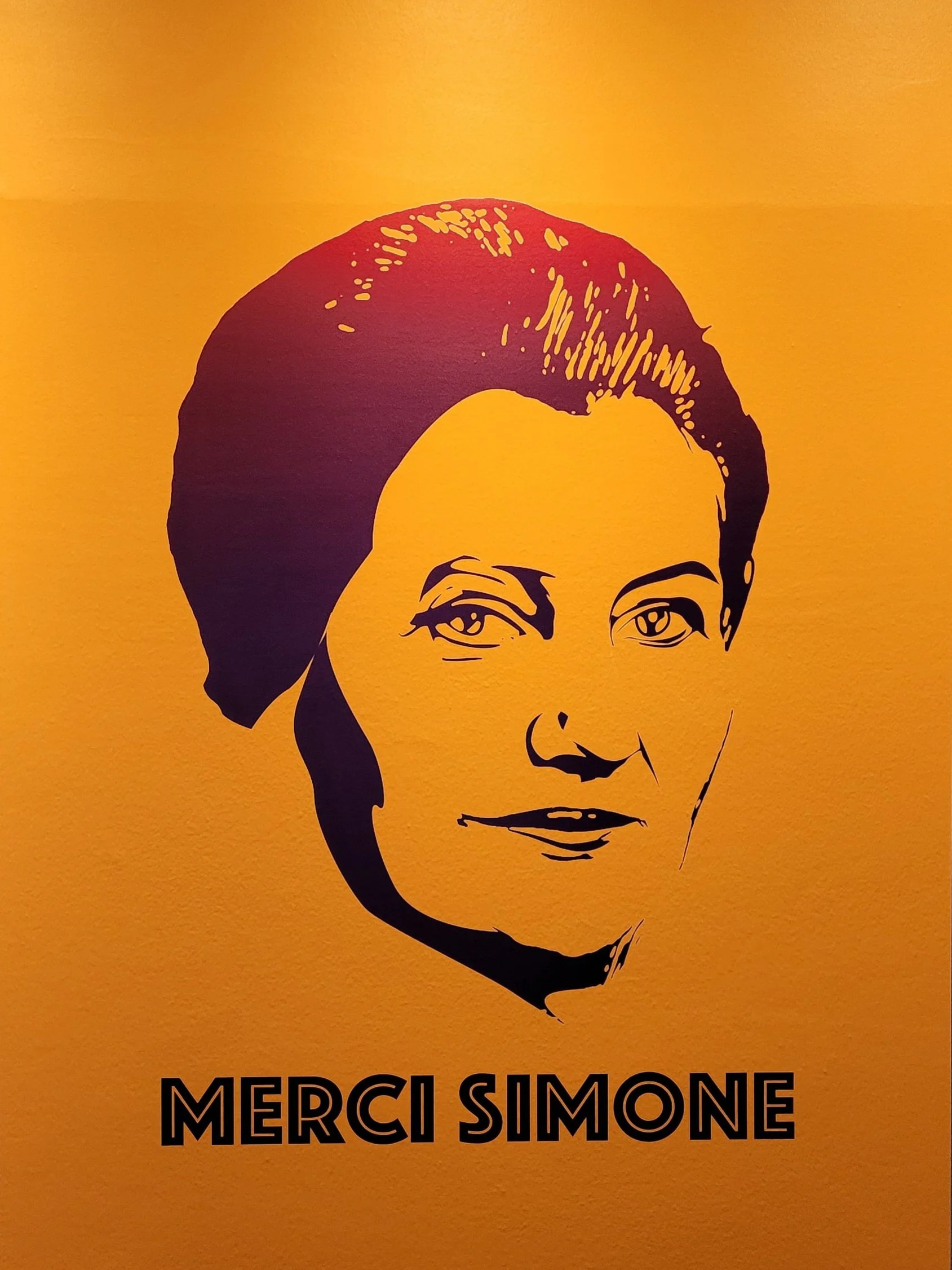
In 1974, Simone Veil, made a fervent speech before the National Assembly to decriminalize abortion in France. Abortion was once a crime in most of the United States just like it was in France. Today, however, abortion is becoming a crime again in the United States.
Annie was a university student from provincial France who wasn’t ready to become a mother. It was 1963, the birth control pill wouldn’t be authorized for another four years. Abortion was still a crime. Betrayed by her doctor, friends, and the man who got her pregnant, Annie struggled to keep her secret from her parents and roommates. Annie first tries to terminate the pregnancy herself, in vain. She then seeks the assistance of a faiseuse d’anges—figuratively a maker of angels, literally an illicit abortionist—who fails to induce a miscarriage. At twelve weeks, Annie’s health, her studies, and her future all hang in the balance.
Finally, on the third try, Annie’s abortion was completed but it nearly cost her life. Though she could have been almost any woman in France, Annie is the protagonist in L’Événement, a semi-autobiographical novel by Annie Ernaux (Gallimard, 2000). The book was adapted into a movie of the same name directed by Audrey Diwan. Translated as Happening, it gives a frank account of the profoundly intimate quandary that Annie faced, just like scores of French women seeking abortions at the time.
In 1971, Nouvel Observateur published a petition calling for the legalization of abortion in France. The magazine had published the names of 343 women who admitted to having abortions. It was a crime just to sign and publish the petition. By then, up to a million women were estimated to have had clandestine abortions in France. The following year in Bobigny just outside Paris, a court convicted five women, including an underage rape victim, of illegal abortion. Journalists and authors wrote about the trial, defying a law that banned coverage of abortion debates in the press. The criminalization of abortion in France was at best hypocritical and at worst plain cruel. The time for institutionalized misogyny had to end.
In 1974, Simone Veil, made a fervent speech before the National Assembly to decriminalize abortion in France. As health minister who had just helped improve access to contraception in France, Veil implored members of Parliament to face the facts about illegal abortions. Not all women could afford them. Those who did, along with anyone who aided them, risked fines or imprisonment. Some women even boarded charter flights to countries where they could get an abortion legally. An estimated 300,000 abortions occurred each year in France. The abortion law was unevenly applied and it was impossible to prosecute all cases.
Veil reminded her audience that these women were neither immoral nor reckless with their pregnancies; they were simply suffering. To force them to endure unwanted pregnancies was an injustice in itself that had to end. Veil was describing the many real Annies of the time: “Currently, those who find themselves in this situation, this distress, who worries about them? The law not only leaves them to shame and solitude, but also to anonymity and the anguish of lawsuits. Forced to hide their condition, they all too often find no one to listen to them, to help them understand, and to bring them support and protection.”
By disassociating abortion from crime, Veil framed the debate as a public health issue. The government’s priority would turn from the prosecution of women to their protection. The decision to terminate a pregnancy would become one between a woman and her doctor. It would give the medical establishment a legitimate role to play with a woman’s reproductive decision instead of the police.
Parliament passed the abortion decriminalization law in January 1975. Originally scheduled to expire in five years, the law was extended indefinitely and has since been amended multiple times. As of March 2022, public health law now requires that any woman may request an abortion from a doctor or midwife in a medical establishment before fourteen weeks of pregnancy. She must also be presented with the different methods of abortion and allowed to freely choose one. Differences in consultations for pregnant minors exist though no additional limitations to an abortion are placed on them. Costs are also assumed by the government, though interestingly, Veil originally argued against such. (Whether this was a ploy to get conservative MPs to vote for the law is uncertain.) Importantly, the law now also punishes those who seek to dissuade or prevent a woman from getting an abortion.
In France, abortion access began with its decriminalization by the legislature. That access has been sustained, and even expanded almost over fifty years. During roughly the same time in the United States, a very different trajectory took place. Instead of lawmakers decriminalizing abortion, cases have been brought to the courts to argue for its permissibility. Ultimately the Supreme Court’s decision in Roe v. Wade (1973) granted women across the United States the right to abortion. Roeframed abortion as a right to privacy under the Fourteenth Amendment. That right was affirmed in Planned Parenthood of Southeastern Pennsylvania v. Casey (1992), which removed certain state restrictions on abortion access. It was in the judiciary that the right to abortion was granted in the United States and it was there that the right was recently taken away in Dobbs v. Jackson Women’s Health Organization (2022).
It is commonly thought this was the first time in American history that a right had been taken away by the judiciary. The Court’s conservative justices asserted that a right to abortion never existed either explicitly in the Constitution nor as precedent under Roe or Casey would imply. “Until the latter part of the 20th century, there was no support in American law for a constitutional right to obtain an abortion. No state constitutional provision had recognized such a right. Until a few years before Roe, no federal or state court had recognized such a right (…) By the time the Fourteenth Amendment was adopted, three-quarters of the States had made abortion a crime at any stage of pregnancy. This consensus endured until the day Roe was decided.”
Abortion was once a crime in most of the United States just like it was in France. Today, however, abortion is becoming a crime again in the United States. Twelve states now prohibit abortion with at least as many now set to enact similar bans. Antiabortion activists in the United States have their sights set on reviving the Comstock laws of the 1870s, which banned publication and distribution of materials about contraception, abortion, even anatomy. This infringement on access to reproductive information and resources is just like what France removed from the books a quarter century ago. To say the United States is regressive when it comes to abortion rights is a tragic understatement.
Incidentally, the Supreme Court’s decision prompted calls by some in France to have abortion codified as a constitutional right there. French Parliamentarians have introduced related bills, which won’t be taken up until Fall 2022 at the earliest, and their fate seems uncertain. A record high number of representatives from Marine Le Pen’s far-right Rassemblement National gained seats in the latest parliamentary elections. Though Le Pen has stated she supports access to abortion, others from her party echo their American counterparts for a repeal of France’s abortion laws. Veil herself specified that the 1975 law would not grant a right to abortion, though subsequent amendments to the law suggest otherwise. Whether the additional step of codifying abortion as a constitutional right in France is necessary or even feasible is yet to be determined.
Since the Veil Law and each of its amendments, the French have been speaking on abortion through their elected representatives in the legislature. In the United States, by contrast, Americans had to rely on abortion access as interpreted by the judiciary. In its reversal of Roe and Casey, the Supreme Court now flaunts its conservative predilections and shows brazen willingness to remove rights, and this despite popular support to the contrary. Even if a Democratic majority in the House of Representatives could muster a bill to reinstate abortion access across the country, a sufficiently large minority of Republicans in the Senate could still prevent the bill from even coming up for debate. Meanwhile, the executive branch finds itself with few options, and can only permit abortion to those women under its jurisdiction, such as Federal government employees or prisoners. What was once a right for all American women is once again a crime depending on which state they live in.
Abortion now returns to the states where even more contestation, as well as unwanted pregnancies and the risk of criminal punishment, are likely. State legislatures will enact abortion laws that will from protection to prohibition. State and Federal courts will surely hear new cases on the matter in the years to come, trying to resettle what had once been thought settled law. When they do, they might heed Simone Veil’s concluding remarks to the National Assembly in France nearly a half century ago: “History shows us that the great debates that once divided the French appear with the passage of time as a necessary step in the creation of a new consensus, which is part of the tradition of tolerance and moderation in our country.”
Lost in Translation: French Séparatisme and American Separation of Church and State
“France is grappling with séparatisme, which the government has targeted as
incompatible with French republican principles and is now sanctioned
under a new law. Crucially for scholars and teachers of French, debates
about séparatisme reflect substantial cultural differences between France
and the United States that can, without sufficient context, lead to errors in
translation. This article proffers the meanings of séparatisme, its close
cousin laïcité, and related terms based on cultural insights into French
society. The lexical history and legacy of these terms are further considered
in comparative context, namely regarding American separation of church
and state.“
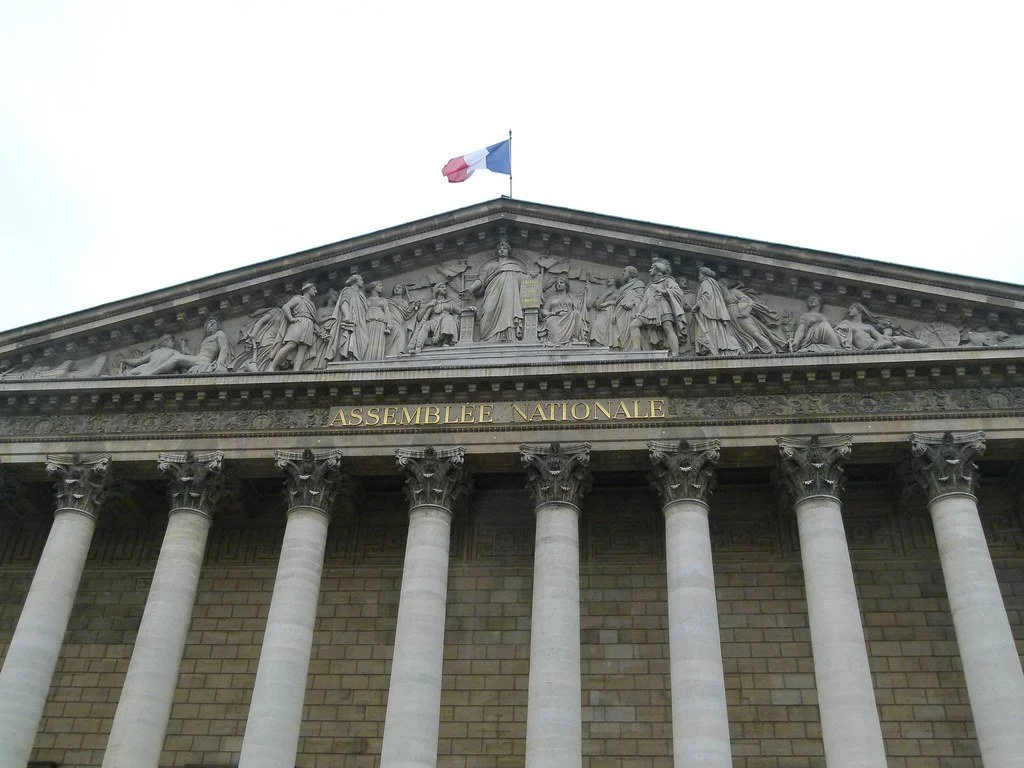
Photo: Michele Neylon (https://www.flickr.com/photos/mneylon/6561474487)
In an article published in French Review May 2022 Volume 95.4, I discuss the passage of a law designed to uphold French republican principles and prevent séparatisme, a concept nominally similar to, but substantively different from, American separation of church and state. As per the abstract:
France is grappling with séparatisme, which the government has targeted as
incompatible with French republican principles and is now sanctioned
under a new law. Crucially for scholars and teachers of French, debates
about séparatisme reflect substantial cultural differences between France
and the United States that can, without sufficient context, lead to errors in
translation. This article proffers the meanings of séparatisme, its close
cousin laïcité, and related terms based on cultural insights into French
society. The lexical history and legacy of these terms are further considered
in comparative context, namely regarding American separation of church
and state.

A crack in the mirror of democracy
With the French presidential election of 2022 now over, a look across the Atlantic is like looking into the mirror. We see a country torn apart, led by a centrist president who’s barely popular who managed to beat out his populist rival. We see a president uneasy about the upcoming legislative elections and what they mean for implementing any coherent policies. We wonder if this president will be able to stitch the country back together, let alone heal the economy, put Covid behind us for good, confront Russia without starting a world war, provide leadership among allies, and still hold up the nation as a beaming example of democracy. It’s a tall order.
The demographic divide is real, both in France and in the United States. And it’s looking a lot like a crack in the mirror.
With the French presidential election of 2022 now over, a look across the Atlantic is like looking into the mirror. We see a country torn apart, led by a centrist president who’s barely popular who managed to beat out his populist rival. We see a president uneasy about the upcoming legislative elections and what they mean for implementing any coherent policies. We wonder if this president will be able to stitch the country back together, let alone heal the economy, put Covid behind us for good, confront Russia without starting a world war, provide leadership among allies, and still hold up the nation as a beaming example of democracy. It’s a tall order. Here’s how the numbers played out in French-American comparison.
Emmanuel Macron won the second round of the 2022 presidential election with 58.5% of votes, becoming the first French president in twenty years to be re-elected to a second (and final) five-year term. Far-right rival Marine Le Pen struck out in her third attempt at the presidency, but with a historic high of 41.5% of votes. Left-wing Jean-Luc Mélenchon was just behind Le Pen after elimination in the first round, leaving many pollsters wondering how his voters would go. Though enough voters turned out for Macron, the overall abstention rate was still high at 28%. Of those who still voted, about 8% cast blank or invalid votes (1).
In the 2020 American presidential election, Joe Biden won the popular vote with 51.3% and 306 electoral votes. Biden won by both measures, unlike George W. Bush in 2000 and Donald Trump in 2016, who lost the popular vote but won the electoral college. In 2020, Trump won 46.9% of the popular vote and 232 electoral votes(2). 67% of Americans turned out to vote (3).
The similarities between France and the United States are striking: just about two-thirds of voters in France and the United States voted in their most recent presidential elections. Yet both countries are sorely pulling apart at the seams.
Some in the French media even compared this election in France to the American presidential election of 2020. There is more than a kernel of truth to this. Urban, educated, and wealthier people tended to vote for Macron/Biden whereas rural, manual laborers, and the poorer tended to vote Trump/Le Pen. (Note that data on race is technically not collected in France, though by reasonable estimates, those identifying as white tended to favor Trump/Le Pen.) The demographic divide is real, both in France and in the United States. And it’s looking a lot like a crack in the mirror.
1 https://www.resultats-elections.interieur.gouv.fr/presidentielle-2022/FE.html
2 https://www.presidency.ucsb.edu/statistics/data/voter-turnout-in-presidential-elections
3 https://www.census.gov/library/stories/2021/04/record-high-turnout-in-2020-general-election.html